Mobile home vs tiny house — which is the better option for you?
Choose a mobile home for families and far more space per euro, and a tiny house for 1–2 minimalist people or frequent mobility. A mobile home offers 30–120 m² and 2–4 bedrooms, with a median of £26,521 used in our current stock, while a tiny house offers 8–25 m² at a median of £20,833 and, on wheels, is truly mobile.
Mobile homes and tiny houses are often mentioned together as alternatives to traditional construction — but they are very different products, for very different profiles. A mobile home is a complete dwelling with 2–4 bedrooms, factory-built and installed on a plot; a tiny house is a micro-dwelling of minimalist design, often on wheels (a registered trailer).
This guide compares the two options in every aspect that matters: dimensions, cost, mobility, comfort, regulations and lifestyle — so you can choose the one that truly suits your project.
What each one actually is
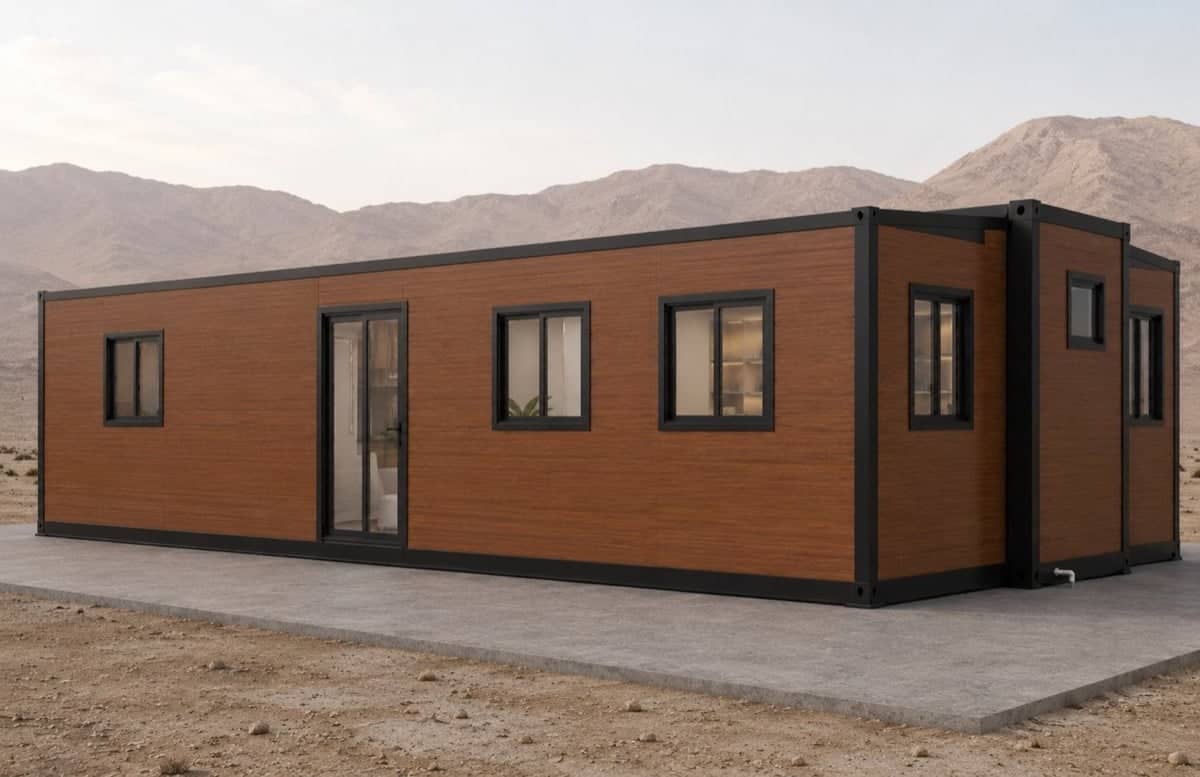
A mobile home is a complete prefabricated dwelling, factory-built on a chassis, delivered to site and installed on a plot. It typically has 30–120 m² of floor area, 2–4 bedrooms, a full bathroom, a fitted kitchen and a living room. It does not have a road registration — moving it requires specialised transport arrangements.
A tiny house (micro-dwelling) is a compact home, typically under 20 m² (many with 10–15 m²), designed according to the minimalist philosophy of "living with less". Tiny houses on wheels (THOW — Tiny House On Wheels) are built on registered trailers and can have road registration, making them truly mobile (towable by car). Fixed tiny houses are built on foundations (or placed on the ground) and function as removable or fixed structures depending on the installation.
Units available now


Head-to-head comparison: numbers and facts
The numbers tell the story better than opinions:
| Factor | Mobile home | Tiny house |
|---|---|---|
| Typical floor area | 30–120 m² | 8–25 m² |
| Bedrooms | 2–4 | 0–1 (loft/mezzanine) |
| Bathrooms | 1–2 (full) | 1 (compact) |
| Price in stock (current, delivered to the UK, + VAT) | from £6,667 (used up to £147,625) | £8,125–£186,083 |
| Median price (current stock) | £26,521 used, £84,583 new | £20,833 |
| Weight | 5–25 tonnes | 2–5 tonnes |
| Width | 3.0–6.1 m | 2.4–2.55 m (trailer limit) |
| Transport | Specialised delivery | Towable by car (if THOW) |
| Road registration | No | Yes (if on a registered trailer) |
| Energy autonomy | Option (off-grid possible) | Common (solar + water) |
| Durability | 25–30+ years | 20–30 years |
| Resale market | Active and liquid | Limited (niche) |
Cost: more space per euro or more design per euro?
A mobile home gives you far more space per euro: in our current stock, the median used unit (usually 2 or 3 bedrooms) costs £26,521, while the median tiny house costs £20,833 for a fraction of the floor area.
Why is the tiny house more expensive per m²? Because the artisanal construction (many tiny houses are handmade or built in small workshops), the high-quality finishes in a reduced space, and the custom storage solutions (every centimetre counts) require more labour hours per m² than the industrial production of mobile homes.
Practical example from the same stock: used 3-bedroom units start at £8,208, while the median tiny house costs £20,833 for far less space. The choice is not about which is "better" — it is about how much space you need and how you want to live.
Mobility: truly mobile vs relocatable
A tiny house on wheels (THOW) is truly mobile — it can be towed by a car or pickup and moved to another plot within hours. The width limited to ~2.55 m and the trailer registration allow it to travel on the road like any trailer.
A mobile home is relocatable, but not mobile day-to-day: at 3.0–6.1 m wide, transport is organised by Mobile Home Logistic, the partner logistics company, of the same group, that transports Green Village homes, and is included in the delivered price. Moving a mobile home is a significant operation that takes days. It is done once (from the factory/supplier to the plot), not regularly.
In practice, if you want to change plots frequently (nomadism, travel, itinerant work), the tiny house is the only option. If you want to install on a plot and stay (with the option to relocate if needed), the mobile home is more practical and cheaper.
Comfort and lifestyle
A mobile home offers the comfort of a conventional house in a reduced size: a fitted kitchen with cooker, fridge and dishwasher; a full bathroom with shower tray or bath; bedrooms with doors and privacy; adequate storage. It is viable for families with children.
A tiny house demands a lifestyle compromise: a minimalist kitchen (usually without a dishwasher), a compact bathroom (often with a dry or composting toilet), a mezzanine bed with reduced headroom (frequently under 1.2 m), and very limited storage. It is ideal for 1–2 people who embrace minimalism as a way of life. For families with children, it quickly becomes impractical.
It is not about which is "better" — they are different lifestyles. A mobile home does not require you to change your habits; a tiny house requires you to radically reduce what you own and how you live.
Regulations by country
The legal framework differs for mobile homes and tiny houses, and varies by country:
| Country | Mobile home (on chassis) | Tiny house on wheels (THOW) |
|---|---|---|
| Portugal | Removable structure — prior communication | Trailer with registration — no licence to park; fixed installation = prior communication |
| France | HLL — declaration prealable | RML (residence mobile de loisirs) — only on campsites, PRL or holiday villages; on private land only as a construction (DP ≤ 20 m², permis de construire above) |
| Spain | Express urban planning licence, like a prefab house (STS 1917/2024) | If installed permanently, the same licence; travelling on a registered trailer needs no planning licence |
| Netherlands | Omgevingsvergunning (if applicable) | Recreatiewoning — variable regulations |
| Germany | Baugenehmigung (varies by Bundesland) | Wohnwagen — strict parking rules |
For tourism and holiday rentals
Both work for tourism, but in different segments. A mobile home is the classic choice for holiday rental and volume glamping (EUR50–EUR120/night), with space for families. A tiny house attracts the experience and Instagrammability segment — rates of EUR80–EUR150/night despite the reduced floor area, because the guest is paying for the unique experience.
To maximise ROI, a mobile home is more efficient: more space, more guests per unit, far lower cost per m². To differentiate a project and attract niches (minimalism, eco-tourism, design), a tiny house can justify premium rates despite the smaller area.
In summary
- Mobile home: 30–120 m², median £26,521 used (current stock), conventional comfort, relocatable but not mobile.
- Tiny house: 8–25 m², median £20,833, minimalist lifestyle, truly mobile (THOW).
- A mobile home offers far more space per euro.
- A tiny house on wheels is the only option for frequent mobility.
- For families: mobile home. For 1–2 minimalist individuals: tiny house.
- For tourism: mobile home = volume and ROI; tiny house = premium niche and differentiation.
Frequently asked questions
Which is cheaper: a mobile home or a tiny house?
A mobile home gives far more space per euro. In our current stock, used units start at £6,667 (median £26,521) and tiny houses at £8,125 (median £20,833), so in absolute terms the median tiny house costs less — for a fraction of the floor area. But if the goal is mobility on wheels, the tiny house is the only option.
Can I live permanently in a tiny house?
Yes, if you are willing to adopt the minimalist lifestyle: very limited space (<20 m²), limited storage, compact bathroom, mezzanine bed. It is viable for 1–2 people. For families, a mobile home (30–120 m², 2–4 bedrooms) is far more practical.
Does a tiny house need planning permission?
It depends. A tiny house on wheels (with trailer registration) does not need a licence to travel, but its fixed installation on a plot is subject to local regulations (which vary by country and municipality). In France, for example, a road-registered towable unit falls under the caravan rules: it may stay on private land for less than 3 months a year without any formality; beyond that a déclaration préalable is required (R111-47, R421-23), and it is never allowed on non-buildable land.
Which has better resale value?
Mobile homes have a more active and liquid resale market, especially in the UK and France (hundreds of thousands of transactions per year). The tiny house market is niche — resale can take longer and the value depends heavily on the design and the location.
Can I use a tiny house as a holiday rental?
Yes, and it is a growing segment. The unique experience and aesthetics of a tiny house attract guests who pay premium rates (EUR80–EUR150/night) despite the reduced floor area. For volume tourism projects, a mobile home is more efficient; for niche and differentiation, a tiny house works well.
Which is more environmentally friendly?
A tiny house typically has a smaller absolute carbon footprint (fewer materials, less energy to heat/cool). But per m², a mobile home can be more efficient (optimised industrial production). Both can be fitted with solar panels, rainwater harvesting and ecological sanitation. The real environmental advantage of a tiny house is that, by being smaller, it encourages a lifestyle with less consumption.
Can I tow a tiny house with my car?
If it is a THOW (Tiny House On Wheels) on a registered trailer, yes — provided the total weight does not exceed the towing capacity of the vehicle (typically 2,000–3,500 kg for an SUV/pickup). Larger tiny houses (over 5 tonnes) need a heavy goods vehicle. A mobile home is never towable by car — it requires specialised transport.
Can I have both? A mobile home and a tiny house on the same plot?
Yes, and it is a popular combination for tourism projects: a mobile home as the main accommodation (families) and a tiny house as a complementary design unit (couples). Or use the tiny house as a garden studio/office next to the main mobile home. Check with the municipality for limits on removable structures per plot.