Mobile homes as holiday rentals: Alojamento Local, glamping and rental income
Yes, a mobile home on the right plot can gross €8,000–€25,000 per year as a holiday rental. Registration is mandatory, as Alojamento Local in Portugal, meublé de tourisme or PRL in France and VUT in Spain, and lodges and glamping pods command the highest nightly rates, while static caravans have the quickest return on investment and insulated park homes extend the season.
A mobile home is not just a place to live — it can be a revenue-generating asset. Across southern Europe, short-term holiday rentals (Alojamento Local in Portugal, meublé de tourisme or PRL in France, vivienda de uso turístico in Spain) are a proven way to earn income from a unit installed on private or leased land.
This guide covers the business case: how to register, which unit types earn the most, what gross returns look like, and the practical steps to go from plot to first booking.
The business case: why mobile homes for tourism
Compared with building a traditional guesthouse, a mobile home offers a fraction of the upfront cost, a simpler licensing route in some countries, and the ability to start earning within weeks of installation. The Algarve, Alentejo, Costa Blanca and Côte d'Azur have high seasonal demand and limited glamping supply — the gap is the opportunity.
A well-located lodge or static caravan in a tourist area can gross €8,000–€25,000 per year in rental income, depending on the unit type, location, season length and occupancy rate.
The figures behind that case are concrete. The initial outlay is a fraction of the cost of masonry construction — used units in our current stock start at £6,667 (median £26,625), against €80,000–€200,000+ for a conventional build — and installation takes weeks rather than 6–18 months. Because the unit is movable, it is not tied to the land: it can be relocated or resold if needed, which keeps market risk low. In Portugal it is also treated as a movable asset for tax purposes, typically depreciated over 10–15 years rather than the 30+ years of a building.
Units available now



Registration: AL, PRL and the rules
In Portugal, a mobile home typically qualifies as a "moradia" or an "estabelecimento de hospedagem" within the AL regime. Registration means filing with the Câmara Municipal and notifying Turismo de Portugal, and you will also need a complaints book, civil liability insurance, the AL identification plaque, a first-aid kit and a fire extinguisher. Since 2023 there have been restrictions in areas under "urban pressure" (Lisbon, Porto, the Algarve), so check with the Câmara that registration is still possible in your chosen area before you buy.
You must register before you can legally rent. The rules vary by country:
- Portugal (Alojamento Local / AL) — register with the local Câmara Municipal and obtain an AL licence. The unit must meet minimum safety and hygiene standards. Registration is free and typically takes 2–4 weeks.
- France (PRL / Meublé de tourisme) — a mobile home on a Parc Résidentiel de Loisirs (PRL) can be rented under the meublé de tourisme regime. Déclaration en mairie required; some communes require prior authorisation.
- Spain (Vivienda de uso turístico / VUT) — each autonomous community has its own rules. In the Comunitat Valenciana and Andalucía, a registro de vivienda turística is needed.
Which unit types earn the most
Glamping sits at the premium end. Timber lodges, panoramic capsules, bubble houses and design units with a deck and hot tub reach €100–€250 a night — double the rate of a standard static caravan — so the higher investment per unit is offset by the nightly return. Success rests on location (nature, scenery, privacy), finish quality (being "different" is not enough, it has to be comfortable), a strong online presence with good photography, and the guest experience: outdoor hot tub, barbecue, welcome pack. Green Village supplies ready-to-operate glamping units — premium lodges, panoramic capsules and floating homes — with transport and installation included.
Not all mobile homes earn equally. The best performers for tourism are:
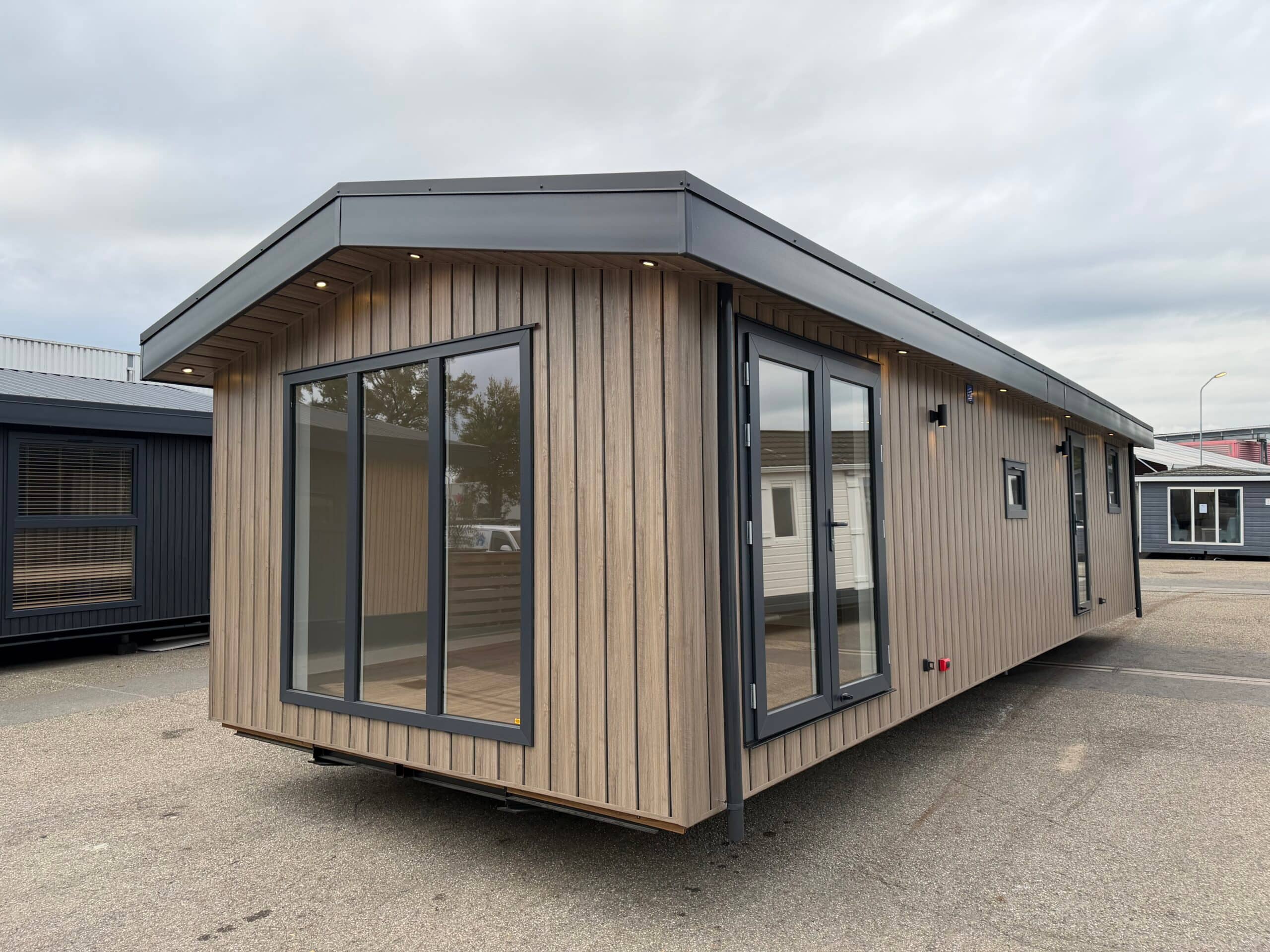
- Lodges (2–3 bedrooms) — premium finish, timber exterior, the "wow" factor that commands higher nightly rates and repeat bookings.
- Glamping pods and capsules — distinctive design, ideal for Airbnb/Booking.com differentiation. Lower capacity but premium pricing per night.
- Park homes — year-round comfort (good insulation) extends the season beyond summer, boosting annual revenue.
- Static caravans — lowest cost, quickest ROI, but lower nightly rates.
Expected returns
A worked example: a used two-bedroom static caravan on the Alentejo coast, let as a seasonal AL from May to October, with a total investment of €35,000 (unit, transport and installation). At an average of €75 a night and 65% occupancy over a 180-night season, it sells 117 nights and grosses €8,775 a year. Deduct around €2,500 a year in running costs (cleaning, utilities, maintenance, insurance) and net income before tax comes to €6,275 — a payback of roughly 5.6 years.
Management moves those figures. With good insulation (BS 3632) and central heating, a unit can operate from March to November — nine months instead of six. Dynamic pricing lifts rates at weekends (+20–30%), in high season (+50–100%) and around local events such as festivals and public holidays. Selling through several channels (Airbnb, Booking.com, your own website, local agencies and tour operators), offering extras (a furnished timber deck, a portable hot tub, bikes, a welcome pack of local produce) and using property management software to automate bookings, messages, remote check-in and cleaning complete the picture.
Returns depend heavily on location, season length and occupancy. Indicative gross figures for a well-managed unit in a popular tourist area:
| Unit type | Indicative gross annual income |
|---|---|
| Static caravan (seasonal, 20 weeks) | €8,000–€12,000 |
| Lodge / premium (seasonal, 20 weeks) | €15,000–€25,000 |
| Glamping pod (seasonal, 16–20 weeks) | €10,000–€18,000 |
| Park home (year-round, 40+ weeks) | €18,000–€30,000 |
In summary
- A mobile home on the right plot can gross €8,000–€25,000 per year in rental income.
- Lodges and glamping pods command the highest nightly rates; static caravans have the quickest ROI.
- Registration is mandatory — AL in Portugal, meublé de tourisme/PRL in France, VUT in Spain.
- Year-round units (park homes with good insulation) extend the season and boost annual returns.
Frequently asked questions
Can I legally rent out a mobile home for holidays?
Yes, provided you register with the local authority. In Portugal, you need an Alojamento Local (AL) licence from the Câmara Municipal. In France, a déclaration en mairie is required. In Spain, the rules vary by autonomous community. Registration is typically free or low-cost.
How much can I earn renting a mobile home?
A well-located unit in a tourist area can gross €8,000–€25,000 per year. Lodges and premium units earn more per night; static caravans have a lower nightly rate but a faster return on investment. Actual returns depend on location, season length and occupancy.
Which type of mobile home is best for rental income?
Lodges (2–3 bedrooms, timber finish) command the highest nightly rates and repeat bookings. Glamping pods and capsules differentiate well on Airbnb/Booking.com. Park homes with good insulation extend the season to year-round. Static caravans are the cheapest to start but earn less per night.