Mobile home vs casa prefabbricata: costo, permessi e differenze principali
Una casa mobile costa meno e si installa prima: nello stock attuale un’usata parte da €13.100 (mediana €38.861), già completa, e le unità in stock sono le più rapide da consegnare, contro i 3–12 mesi di una prefabbricata. La casa mobile ha un iter autorizzativo più semplice e reversibile, non inesistente, ed è un bene mobile rilocabile; la prefabbricata è un immobile fisso, sempre soggetta al regime completo ma idonea al mutuo.
"Mobile home" e "casa prefabbricata" significano entrambe "costruita in fabbrica" — ma le somiglianze finiscono in gran parte qui. Una mobile home arriva completa e pronta all'uso nel giro di pochi giorni; una casa prefabbricata può richiedere mesi di montaggio e finiture in cantiere. Una mobile home ha un iter autorizzativo più semplice e reversibile, non inesistente; una casa prefabbricata segue sempre il regime completo. E una mobile home costa una frazione di una prefabbricata di superficie equivalente.
Questa guida mette a confronto le due soluzioni — insieme a case modulari e case container — così da poter scegliere l'opzione giusta per il terreno, il budget e i tempi a disposizione.
Cosa si intende per mobile home e per prefabbricata
Una mobile home è un'abitazione completa costruita in fabbrica su un telaio in acciaio e trasportata intera (o in due metà) fino al terreno. Non è fissata a una fondazione permanente — poggia su piedini o basamenti di appoggio. Questa è la distinzione legale chiave: essendo movibile, nella maggior parte delle giurisdizioni è classificata come bene mobile, non come immobile.
Una casa prefabbricata è anch'essa costruita in fabbrica, ma viene montata su una fondazione permanente in loco. Una volta installata, è legalmente classificata come immobile. Le case modulari (assemblate da moduli prefabbricati) e le case container (container marittimi riconvertiti) rientrano in questa categoria quando sono fissate a fondazioni.
Unità disponibili ora


Confronto diretto
Altri due fattori meritano attenzione. Sulla personalizzazione, la mobile home si colloca su un livello moderato — si sceglie tra modelli esistenti —, mentre la prefabbricata consente un progetto da zero e la casa container sta tra moderato e alto. Sull'efficienza energetica, una prefabbricata progettata secondo gli standard Passivhaus è in testa; un park home costruito secondo la norma BS 3632 è ragionevolmente efficiente per il suo prezzo; una casa container richiede un isolamento aggiuntivo significativo, perché le pareti in acciaio conducono caldo e freddo; e una static caravan da vacanza (EN 1647) è la meno efficiente, ma anche la più economica.
Anche sulla rivendita le tre soluzioni si comportano in modo diverso. Il mercato dell'usato per le mobile home è attivo e liquido, soprattutto nel Regno Unito e in Francia, e un'unità ben tenuta si rivende nel giro di settimane. Poiché si vende indipendentemente dal terreno, chiunque disponga di un lotto adatto è un potenziale acquirente. Una prefabbricata si vende come immobile, insieme al terreno: il suo valore sale o scende con il mercato immobiliare locale e la vendita è più lenta. Le case container hanno un mercato di rivendita limitato e poco maturo: la personalizzazione che rende ogni unità unica ne complica la vendita, e si rivendono più facilmente come spazio commerciale che come abitazione.
Le differenze pratiche in sintesi:
| Fattore | Mobile home | Casa prefabbricata |
|---|---|---|
| Prezzo dell'unità | usata da €13.100, mediana €38.861 (stock attuale, IVA esclusa) | secondo progetto, più fondazioni, allacci e permessi |
| Tempi di costruzione + consegna | data confermata per iscritto | 3–12 mesi |
| Iter autorizzativo | Più semplice in alcuni Paesi (comunicação prévia in PT dove i parametri sono definiti), ma non esente: PT licença o comunicação prévia, ES licenza urbanistica (STS 1917/2024), FR solo in campeggio/PRL | Sempre richiesto (regime completo) |
| Fondazione permanente | No (telaio su basamenti) | Sì (cemento) |
| Classificazione legale | Bene mobile | Immobile |
| Rilocabilità | Sì (può essere spostata) | No (fissa) |
| Rivendita | Più semplice (si sposta) | Legata al terreno |
Quando la mobile home è la scelta migliore
Una mobile home vince su velocità, costo e flessibilità. Ha senso quando: il budget è limitato e si vuole iniziare a usare lo spazio rapidamente; si dispone di una piazzola in un parco o campeggio autorizzato; si vuole avere la possibilità di rilocare l'unità in futuro; oppure l'uso è stagionale (vacanze, turismo, glamping).
Esempi tipici: una coppia che vuole una seconda casa nell'Alentejo senza lavori edili; un imprenditore che apre un glamping; una famiglia che ha bisogno di un'abitazione mentre costruisce la casa definitiva. Con una buona manutenzione, una mobile home dura 25–30 anni o più. Anche l'impatto ambientale in fase di costruzione è minore — produzione efficiente in fabbrica, meno scarti — e il terreno non viene occupato in modo permanente, anche se i materiali (legno, vetroresina, alluminio) in genere non sono riciclati.
Quando conviene di più una prefabbricata
Una casa prefabbricata ha senso quando: si sta costruendo una residenza principale permanente; il terreno è edificabile e ha il permesso di costruire; si vuole che l'unità si rivaluti come immobile; oppure serve una planimetria personalizzata che superi le dimensioni di una mobile home.
Esempi tipici: una famiglia che intende viverci per 30 anni o più, oppure chi desidera finiture di alta gamma. Essendo una costruzione fissa in cemento, legno strutturale o acciaio, una prefabbricata dura 50 anni e oltre, e può raggiungere gli standard Passivhaus, con un isolamento di alto livello e consumi energetici quasi nulli. Il rovescio della medaglia: le fondazioni in cemento hanno un'elevata impronta di carbonio e la casa non può essere spostata.
E le case container?
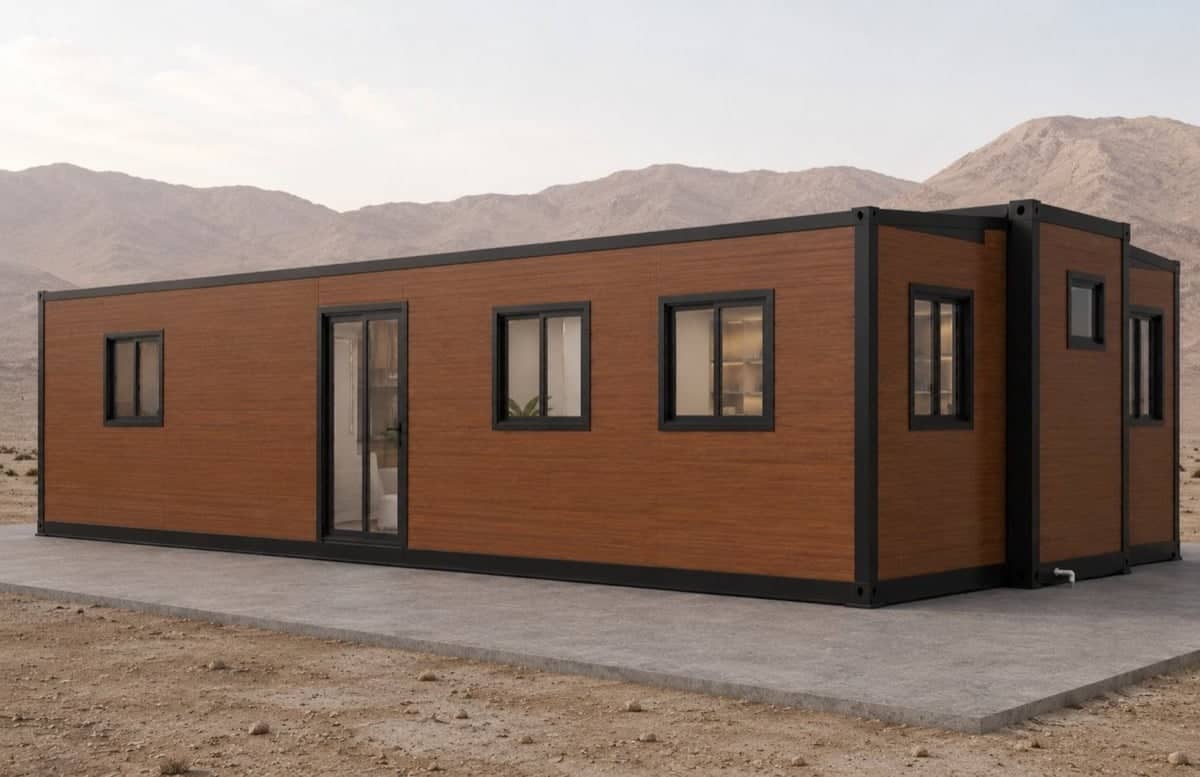
Le case container offrono un'estetica industriale e rigidità strutturale. Possono costare meno per unità rispetto a una mobile home, ma isolamento, finiture interne e impianto idraulico fanno lievitare rapidamente i costi. Richiedono inoltre il permesso di costruire quando sono fissate a una fondazione. Come unità turistica o di glamping un container può funzionare bene — come abitazione permanente, un park home o una prefabbricata modulare sono di solito la scelta più pratica.
Sul piano dei permessi, le case container si trovano in una zona grigia. Un container appoggiato su blocchi, che mantiene la propria mobilità, può avere un iter più semplice in alcuni Paesi, ma non è esente da controllo urbanistico; uno saldato a una platea o posato su fondazioni permanenti è generalmente trattato come costruzione fissa, quindi conviene sempre verificare con il comune prima di investire. Usi tipici: uno studio di design in giardino, un bar o ristorante temporaneo, uno spazio di co-working. Mobile home e container possono anche convivere sullo stesso terreno, formula diffusa nei progetti turistici e commerciali: le mobile home come alloggi, i container come aree comuni, ad esempio reception o bar.
In sintesi
- Nello stock attuale una mobile home usata parte da €13.100 (mediana €38.861), già completa; una prefabbricata aggiunge al prezzo della casa fondazioni, allacci e permessi.
- Una mobile home in stock è la soluzione più rapida da consegnare; una prefabbricata richiede 3–12 mesi.
- Una mobile home ha un iter autorizzativo più semplice e reversibile, non inesistente; una prefabbricata segue sempre il regime completo.
- Una mobile home è rilocabile e classificata come bene mobile; una prefabbricata è un immobile fisso.
- Scegliere la mobile home per velocità, costo e flessibilità; scegliere la prefabbricata per la residenza permanente e l'idoneità al mutuo.
Domande frequenti
Una mobile home costa meno di una casa prefabbricata?
In genere sì. Nello stock Green Village attuale una mobile home usata parte da €13.100 (mediana €38.861) e arriva completa, pronta all'uso; una casa prefabbricata richiede in più fondazioni, allacci e permessi, e il suo costo dipende dal progetto.
Serve il permesso di costruire per una mobile home?
Su terreno privato, se installata con carattere di permanenza, di norma sì: in Portogallo licença o comunicação prévia secondo il PDM, in Spagna licenza urbanistica (STS 1917/2024), in Francia la mobile home con ruote è ammessa solo in campeggio/PRL. In un parco o campeggio autorizzato, ciò che copre la licenza del parco dipende dal paese — in Spagna non sostituisce la licenza comunale. Conviene sempre verificare con il comune locale.