Mobilheim vs. Fertighaus: Kosten, Genehmigungen und die wichtigsten Unterschiede
Ein Mobilheim ist meist günstiger und schneller als ein Fertighaus: Eine Einheit aus dem Bestand ist am schnellsten bezugsfertig, ein Fertighaus braucht 3–12 Monate, und gebrauchte Mobilheime beginnen im aktuellen Bestand bei 12.500 € (Median 33.500 €). Ein Mobilheim durchläuft ein einfacheres, umkehrbares Genehmigungsverfahren (genehmigungsfrei ist es nicht) und bleibt versetzbar, während das Fertighaus als feste Immobilie Fundament und das volle Genehmigungsverfahren braucht, dafür aber hypothekenfähig ist.
„Mobilheim" und „Fertighaus" bedeuten beide „in der Fabrik gebaut" — doch damit enden die Gemeinsamkeiten weitgehend. Ein Mobilheim kommt komplett fertig an, und der Liefertermin wird schriftlich bestätigt; ein Fertighaus kann Monate an Montage und Ausbau vor Ort erfordern. Das Genehmigungsverfahren für ein Mobilheim ist einfacher und umkehrbar, entfällt aber nicht; ein Fertighaus durchläuft immer das volle Verfahren. Und ein Mobilheim kostet nur einen Bruchteil eines gleich großen Fertighauses.
Dieser Ratgeber vergleicht beide Optionen direkt miteinander — zusammen mit Modulhäusern und Containerhäusern —, damit Sie die richtige Wahl für Ihr Grundstück, Ihr Budget und Ihren Zeitplan treffen können.
Was als Mobilheim gilt und was als Fertighaus
Ein Mobilheim ist eine vollständige, in der Fabrik auf einem Stahlchassis gebaute Wohnung, die als Ganzes (oder in zwei Hälften) zum Standort transportiert wird. Es ist nicht mit einem dauerhaften Fundament verbunden — es steht auf Stützfüßen oder Auflagern. Das ist der entscheidende rechtliche Unterschied: Weil es versetzbar ist, gilt es in den meisten Rechtsordnungen als bewegliches Gut (bem móvel) und nicht als Immobilie (imóvel).
Ein Fertighaus wird ebenfalls in der Fabrik hergestellt, aber vor Ort auf einem dauerhaften Fundament montiert. Nach der Montage gilt es rechtlich als Immobilie. Modulhäuser (aus vorgefertigten Modulen zusammengesetzt) und Containerhäuser (umgebaute Schiffscontainer) fallen in diese Kategorie, sobald sie mit einem Fundament fest verbunden sind.
Jetzt verfügbar


Der direkte Vergleich
Zwei weitere Faktoren verdienen einen Blick. Bei der Individualisierung liegt ein Mobilheim im mittleren Bereich — Sie wählen aus bestehenden Modellen —, während ein Fertighaus eine Planung von Grund auf erlaubt und ein Containerhaus sich zwischen mittel und hoch bewegt. Bei der Energieeffizienz liegt ein nach Passivhaus-Standard geplantes Fertighaus vorn; ein Park Home nach BS 3632 ist für seinen Preis recht effizient; ein Containerhaus braucht erhebliche zusätzliche Dämmung, weil Stahlwände Wärme und Kälte leiten; und ein Freizeit-Mobilheim nach EN 1647 ist am wenigsten effizient, dafür aber am günstigsten.
Auch beim Wiederverkauf unterscheiden sich die drei Optionen. Der Gebrauchtmarkt für Mobilheime ist aktiv und liquide, vor allem im Vereinigten Königreich und in Frankreich; ein gut gepflegtes Mobilheim findet oft innerhalb von Wochen einen Käufer. Da es getrennt vom Grundstück verkauft wird und auf jedem geeigneten Grundstück aufgestellt werden kann, ist der Kreis möglicher Käufer groß. Ein Fertighaus wird als Immobilie samt Grundstück verkauft — sein Wert steigt oder fällt mit dem örtlichen Immobilienmarkt, und der Verkauf dauert länger. Containerhäuser haben einen begrenzten, wenig ausgereiften Wiederverkaufsmarkt: Die Individualisierung, die jedes Exemplar einzigartig macht, erschwert den Verkauf, und als Gewerbefläche lassen sie sich leichter verkaufen als zu Wohnzwecken.
Die praktischen Unterschiede auf einen Blick:
| Faktor | Mobilheim | Fertighaus |
|---|---|---|
| Preis (aktueller Bestand, MwSt. separat) | gebraucht ab 12.500 €, Median 33.500 € | auf Anfrage |
| Bau- und Lieferzeit | Liefertermin wird schriftlich bestätigt | 3–12 Monate |
| Baugenehmigung | In manchen Ländern einfacheres Verfahren (PT: comunicação prévia, wo die Bebauungsparameter festgelegt sind), aber keine Befreiung: PT Lizenz oder comunicação prévia, ES licencia urbanística (STS 1917/2024), FR nur auf Campingplatz/PRL | Immer erforderlich (volles Verfahren) |
| Dauerhaftes Fundament | Nein (Chassis auf Auflagern) | Ja (Beton) |
| Rechtliche Einstufung | Bewegliches Gut | Immobilie |
| Versetzbar | Ja (kann verlegt werden) | Nein (fest verbunden) |
| Wiederverkauf | Einfacher (es ist versetzbar) | An das Grundstück gebunden |
Wann ein Mobilheim die bessere Wahl ist
Ein Mobilheim gewinnt bei Geschwindigkeit, Kosten und Flexibilität. Es ist sinnvoll, wenn: das Budget knapp ist und Sie den Raum schnell nutzen möchten; das Grundstück keine Baugenehmigung für einen Neubau hat; Sie sich die Option offenhalten möchten, die Einheit später zu versetzen; oder die Nutzung saisonal ist (Ferien, Tourismus, Glamping).
Typische Beispiele: ein Paar, das ohne Bauarbeiten einen Zweitwohnsitz im Alentejo möchte; ein Unternehmer, der einen Glampingplatz eröffnet; oder eine Familie, die eine Unterkunft braucht, während das endgültige Haus gebaut wird. Bei guter Pflege hält ein Mobilheim 25–30 Jahre oder länger. Auch die Umweltbelastung der Herstellung ist geringer — effiziente Fertigung im Werk, weniger Abfall —, und das Grundstück wird nicht dauerhaft beansprucht. Der Nachteil: Die verwendeten Materialien (Holz, Glasfaserkunststoff, Aluminium) sind in der Regel nicht recycelt.
Wann ein Fertighaus mehr Sinn ergibt
Ein Fertighaus ist sinnvoll, wenn: Sie einen dauerhaften Hauptwohnsitz bauen; das Grundstück für Bebauung ausgewiesen ist und über eine Baugenehmigung verfügt; die Einheit als Immobilie an Wert gewinnen soll; oder Sie einen individuellen Grundriss benötigen, der die Abmessungen eines Mobilheims übersteigt.
Typische Beispiele: eine Familie, die 30 Jahre oder länger im Haus wohnen will, oder Käufer, die eine hochwertige Ausstattung wünschen. Als feste Konstruktion aus Beton, Konstruktionsholz oder Stahl hält ein Fertighaus 50 Jahre und länger und kann mit erstklassiger Dämmung und einem Energiebedarf nahe null den Passivhaus-Standard erreichen. Die Kehrseite: Betonfundamente haben einen hohen CO₂-Fußabdruck, und das Haus lässt sich nicht versetzen.
Und Containerhäuser?
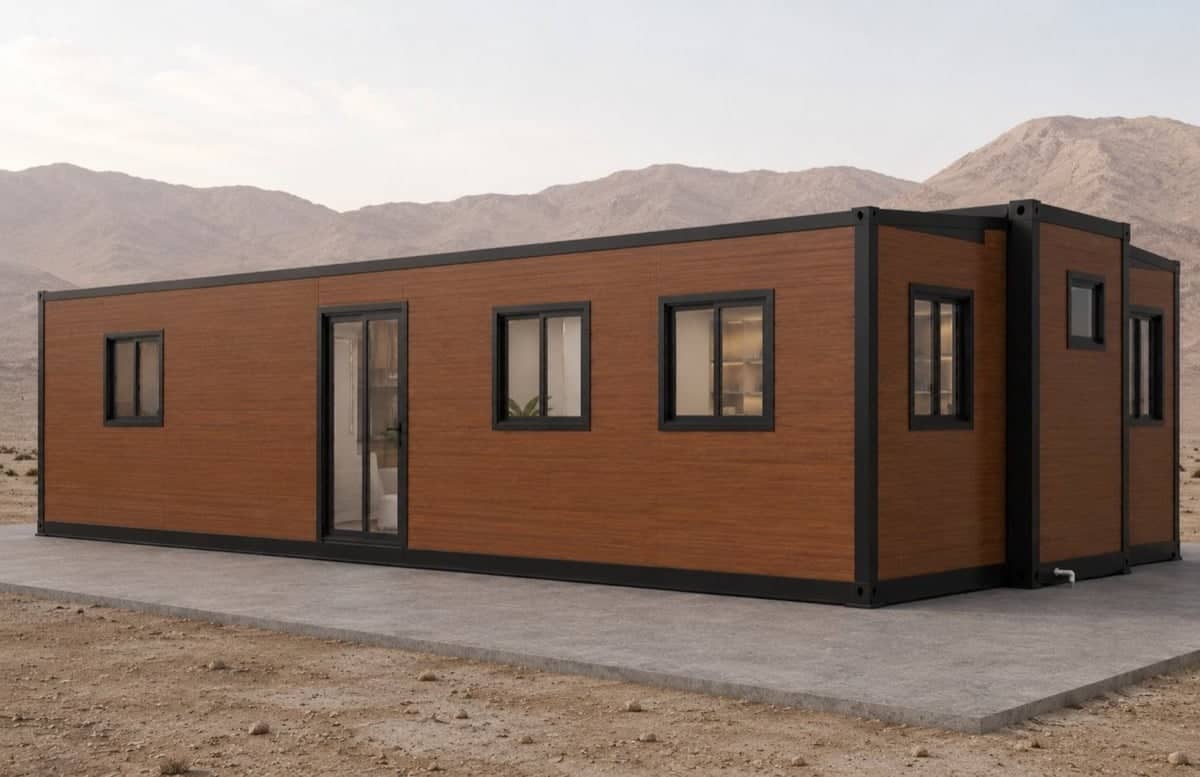
Containerhäuser bieten eine industrielle Optik und strukturelle Steifigkeit. Sie können pro Einheit günstiger sein als ein Mobilheim, aber Dämmung, Innenausbau und Sanitärinstallation summieren sich schnell. Zudem benötigen sie eine Baugenehmigung, sobald sie mit einem Fundament verbunden sind. Als touristische Einheit oder für Glamping kann ein Container gut funktionieren — als dauerhaftes Zuhause ist ein Park Home oder ein modulares Fertighaus meist die praktischere Wahl.
Bei der Genehmigung bewegen sich Containerhäuser in einer Grauzone. Ein Container, der auf Blöcken steht und mobil bleibt, ist umkehrbar, aber nicht befreit: er bleibt der vorherigen Kontrolle unterworfen (in Portugal Lizenz oder comunicação prévia je nach Zone); einer, der mit einer Bodenplatte verschweißt oder auf ein dauerhaftes Fundament gesetzt wird, gilt in der Regel als festes Bauwerk — klären Sie das vor jeder Investition mit der Gemeinde. Typische Einsätze sind ein Designstudio im Garten, eine Bar oder ein Restaurant auf Zeit oder ein Co-Working-Space. Mobilheime und Container lassen sich auch auf demselben Gelände kombinieren — eine beliebte Lösung bei touristischen und gewerblichen Projekten: Mobilheime als Unterkünfte, Container als Gemeinschaftsflächen wie Rezeption oder Bar.
Zusammenfassung
- Gebrauchte Mobilheime beginnen im aktuellen Bestand bei 12.500 € (Median 33.500 €); ein Fertighaus braucht zusätzlich Fundament und Montage vor Ort.
- Ein Mobilheim ist am schnellsten bezugsfertig, wenn es aus dem Bestand kommt; ein Fertighaus braucht 3–12 Monate.
- Ein Mobilheim hat ein einfacheres und umkehrbares Genehmigungsverfahren, ist aber nicht genehmigungsfrei; ein Fertighaus durchläuft immer das volle Verfahren.
- Ein Mobilheim ist versetzbar und gilt als bewegliches Gut; ein Fertighaus ist eine fest verbundene Immobilie.
- Mobilheim wählen für Geschwindigkeit, Kosten und Flexibilität; Fertighaus wählen für den dauerhaften Wohnsitz.
Häufig gestellte Fragen
Ist ein Mobilheim günstiger als ein Fertighaus?
In der Regel ja. Im aktuellen Bestand beginnen gebrauchte Mobilheime bei 12.500 € (Median 33.500 €); bei einem Fertighaus kommen zum Hauspreis Fundament, Baugenehmigung und Montage vor Ort hinzu, sodass es bei gleicher Wohnfläche meist deutlich teurer ist.
Benötige ich eine Baugenehmigung für ein Mobilheim?
Ja, sobald es auf privatem Grundstück dauerhaft aufgestellt wird (Auflager, Anschlüsse, Wohnnutzung): Portugal verlangt je nach PDM eine Lizenz oder comunicação prévia (RJUE), Spanien eine licencia urbanística (STS 1917/2024), und Frankreich lässt ein Mobilheim mit Rädern nur auf Campingplatz/PRL zu. Was die Lizenz eines Parks abdeckt, hängt vom Land ab — in Spanien ersetzt sie die kommunale Genehmigung nicht. Prüfen Sie dies immer bei der örtlichen Gemeinde.